
Asbestos can remain hidden in a home for decades without producing a smell, visible dust, or an obvious warning sign. It may be sealed behind walls, beneath flooring, inside insulation, or around pipes and ductwork. Many homeowners only discover it while planning renovations, investigating damaged materials, executing a designated substance survey or preparing to sell. Before scheduling asbestos removal in Mississauga, a professional inspection and laboratory testing can determine whether suspect materials contain asbestos and whether they are likely to be disturbed.
Why Is Asbestos So Difficult to Recognize?
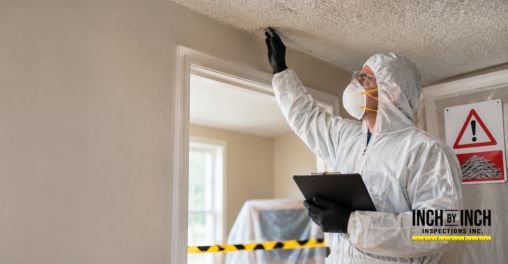 Asbestos was added to many different building materials rather than installed as one easily recognized product. Two ceiling tiles, flooring products, or insulation materials can look nearly identical even if only one contains asbestos.
Colour, age, texture, and location may help an inspector identify a material as suspect, but they cannot confirm its contents. Laboratory analysis is needed because asbestos fibres are microscopic and cannot be reliably identified by sight.
A home can also contain several different asbestos-containing products. Finding one material does not confirm that every suspect material has been located.
Which Homes Are More Likely to Contain Asbestos?
Asbestos use was common in Canadian construction before 1990. Older homes are therefore more likely to contain materials manufactured during periods when asbestos was widely used.
However, the age of the house alone does not provide a complete answer. Homes may have been renovated in stages, and older materials can remain beneath newer finishes. Renovation records may also be incomplete or unavailable.
Possible locations include:
- Textured ceilings and ceiling tiles
- Vinyl flooring and black flooring adhesive
- Drywall joint compound and plaster
- Pipe, boiler, and duct insulation
- Vermiculite attic insulation
- Cement board and exterior siding
- Roofing materials
- Furnace and hot-water tank insulation
- Caulking, sealants, and some fire-resistant products
Why Do Renovations Commonly Reveal Hidden Asbestos?
Renovations expose parts of a home that have not been visible for years. Removing cabinets, flooring, drywall, or ceiling finishes can uncover original materials that were never replaced.
The danger is not simply that asbestos exists. The concern is that cutting, sanding, scraping, drilling, or breaking a material can release fibres into the air.
Before renovating an older property, identify which materials will be disturbed. Testing should occur before demolition begins, not after dust has already spread through the work area.
Can You Collect a Sample Yourself?
Collecting a sample can disturb the very material you are trying to identify. Improper sampling may release dust, contaminate nearby surfaces, or produce an unrepresentative sample.
A professional can:
- Review the age and renovation history of the property
- Identify materials that may require testing
- Select appropriate sampling locations
- Collect and contain samples carefully
- Submit samples to an independent laboratory
- Explain the results in the context of the planned work
Our guide to asbestos testing in Mississauga provides more information about confirming whether a material contains asbestos.
Does Every Asbestos-Containing Material Need Removal?
Not necessarily. An intact material that is inaccessible and unlikely to be disturbed may sometimes be managed where it is. Removal may be more appropriate when the material is damaged, deteriorating, accessible, or located within a renovation area.
The recommendation depends on the material's condition, location, and likelihood of disturbance. Professional asbestos removal in Mississauga may involve containment, controlled removal, specialized cleaning, secure waste handling, and verification appropriate to the project.
What Should You Do If You Suspect Asbestos?
Do not drill, scrape, sand, sweep, vacuum, or pull apart the material. Keep people away from the immediate area if it is damaged and avoid creating airflow that could move dust.
Inch By Inch Inspections has served Mississauga and the GTA since 2006. Our certified and insured team provides asbestos inspections, testing coordination, reporting, removal, and abatement for homes, commercial buildings, and renovation projects.
If you are planning work in an older home or have uncovered suspicious material, contact us before disturbing it. Identifying the material first can prevent an avoidable exposure and help the rest of the project proceed with the correct precautions.