Request a Free Quote

Inch By Inch Inspections is a locally owned, IICRC-NACHI Firm providing professional asbestos testing, asbestos inspections, asbestos air testing, and bulk sampling for residential, commercial, and industrial properties throughout Toronto and the Greater Toronto Area since 2006.
Whether you are buying or selling a property, planning a renovation, or concerned about exposure, Inch By Inch technicians are equipped with advanced technology and decades of expertise to deliver clear, objective asbestos inspection findings.
Why Property Owners Trust Inch By Inch for Asbestos Testing & Inspections:
Inch by Inch Inspections provides professional, asbestos testing and inspections. Our inspection will include a complete:
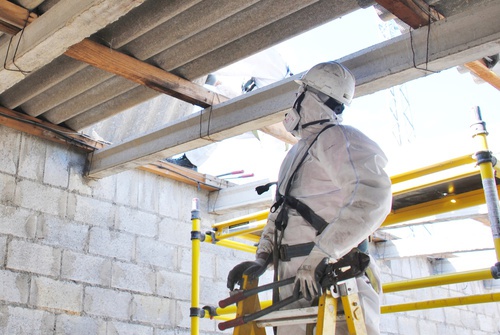 Visual examination
If asbestos is present, our inspector will provide a written evaluation describing its location and extent of damage, and give recommendations for correction or prevention.
Inch By Inch Inspections follows Ministry of Labour regulation 278/05 to ensure your safety for asbestos testing and inspections.
Any home below the third floor of a multi-level, multi-family dwelling needs to be checked for both. Both are usually found in homes built before 1989. Asbestos is a naturally occurring fibrous mineral that was widely used in the construction industry. Asbestos by itself has a high tolerance for heat and was considered one of the best materials for fireproofing and insulation. It was largely accepted as a standard in the building industry and was intermixed with concrete as well as used in its material state. During the latter half of the 20th century, it was discovered through research that off-gassing and dust from asbestos created serious health concerns in humans and now the material is banned from most municipalities and older local properties that have the material must engage in asbestos removal in Toronto.
Building materials that may contain asbestos, include:
The cost of asbestos removal with Inch By Inch Inspections depends on several factors, including:
In Toronto and the GTA, older homes and commercial buildings may contain asbestos in flooring, ceiling tiles, drywall compound, pipe insulation, plaster, or other building materials.
Before planning renovations or asbestos removal in Toronto, Inch By Inch Inspections recommends booking a professional asbestos inspection or designated substance survey to determine if professional testing is required.
At Inch By Inch Inspections, we collect samples when appropriate and use lab analysis to confirm asbestos before removal decisions are made. Costs may also be affected by containment needs, disposal requirements, air testing, and whether the work is part of a renovation, demolition, or designated substance survey. A proper inspection from a certified professional inspector helps you plan safely and avoid unnecessary removal.
Asbestos used to be credited with being fire-resistant and an insulator, so it gained widespread use in buildings and houses in the 19th century until the early 1990s. Its dense nature made it suitable for:
But decades later, the dangerous health implications of asbestos exposure were made known. They include:
In spite of the risks, asbestos was not officially prohibited in Canada until the late 20th century. What that means is, many Toronto buildings, particularly those constructed prior to the 1990s, can still harbour dangerous asbestos fibres.
If your building was constructed prior to 1990, it can still have asbestos in:
Professional asbestos removal is not just a precautionary measure, it's a matter of health and safety. Whether you're getting some renovation work done or simply need to feel secure, asbestos removed safely should be high on your priority list.
Before 1989, asbestos was routinely used to insulate heating pipes in homes. Although it worked just fine, we now know that it can be very dangerous to health, especially if disturbed or in a damaged condition.
Asbestos has microscopic fibres, too small to be seen with the naked eye. When in the air, the fibres are capable of the following:
When asbestos fibres become embedded in the body, they don't deteriorate. In time, this can develop into severe diseases, such as:
Though low-level exposure may not induce instant symptoms, long-term or high-level exposure heightens the risk of illness substantially.
A professional inspection will let you know:
If you suspect you have asbestos in your home, don't wait. Contact a licensed inspector and discuss with a healthcare professional if you're concerned about exposure.
Research over time has discovered that asbestos creates toxic environments that can lead to severe and lethal health problems. Over time, asbestos can break down and release sharp microscopic fibers into the local air stream and can be easily inhaled by anyone breathing in the interior air. These solid fibers cause scarring inside the lungs, known as fibrosis, which creates difficulty in breathing and will lead to a host of other respiratory and circulatory health issues. Longer-term exposure to asbestos-contaminated air can lead to more severe health problems such as lung cancer which can lead to death. Older GTA homes usually 1985 and under and commercial property built before the 1990s may have asbestos and asbestos-based materials in their structures; combined with the drastic health concerns created by the material mean asbestos removal in Toronto is is a non-negotiable maintenance issue that must be completed to ensure the area is safe and healthy.
When asbestos is cut, grounded up, or disturbed, asbestos fibers can fly into the air and stay there for a long time. When you breathe in, asbestos fibers can get stuck deep in your lungs. The fibers damage the alveoli, the tiny air sacs at the end of your breathing passages, deep in your lungs. Normally your alveoli inflate and deflate like a balloon, taking in oxygen and getting rid of carbon dioxide. Healthy alveoli are nice and stretchy. Asbestos causes damage and scarring (fibrosis) so your alveoli become stiff, not stretchy. When your alveoli are stiff your lungs have a harder time taking in oxygen, and the muscles in your chest have to work harder to force the air in and out of your lungs. Asbestos also increases the risk of developing lung cancer, especially in those who have smoked.
Asbestos is a naturally occurring mineral that is made up of microscopic fibers. There are several known types of asbestos each with its own unique characteristics. Certain types of asbestos have razor-sharp fibers that could easily be inhaled by humans if exposed to it. Asbestos has excellent fireproofing and fire retardant characteristics. It was used extensively in commercial and residential construction until the negative long-term health effects were discovered. Asbestos material was commonly used in core building materials such as insulation and drywall. The mineral itself has no off-gases and can only be detected through laboratory testing.
These days, only a small number of products sold in Canada contain asbestos. Asbestos may still be used in brake linings, clutch facings, and some roof shingles. Asbestos is regulated in Canada by the federal government’s Hazardous Products Act.
Nowadays, Canadians are most often exposed to asbestos when working in an industry that makes or uses asbestos products, or when they are knocking down or fixing old buildings. People who work near asbestos should use special equipment and have special training on how to limit their exposure. Handling material that contains asbestos is not a job for a do-it-yourselfer; it requires the expertise and the equipment of a professional. If you are planning to repair or seal a building that may contain asbestos, hire an experienced contractor with specialized training in how to handle and remove asbestos.
Although asbestos is banned for use in most Canadian products, it is still mined here in Canada and it is still exported and widely used in other countries. This means millions of people worldwide are exposed to asbestos and at risk of developing asbestos-related diseases.
If you're purchasing a home built before 1985 or renovating, you could be unknowingly exposing yourself to asbestos-containing materials. Asbestos was everywhere in household products and building materials, and it's still in thousands of aging Toronto homes.
Asbestos can be located in many places in older homes, including:
Asbestos is not always hazardous. If the materials are intact and undisturbed, they may not pose a health risk. However:
Never attempt to remove asbestos yourself. Improper handling can cause harmful fibres to become airborne, increasing your risk of lung disease.
Contractors rely on duct tape to complete, repair, and configure ductwork along HVAC systems. The nondescript grey shiny tape is used in areas of high heat and has excellent bonding properties against aluminum and other metals commonly used in HVAC systems. Prior to the 1990s, many builders and contractors used duct tape that contained asbestos because of its ability to handle high heat. Unfortunately, asbestos fibers are now known to cause severe health problems and are not used in the building industry. These ‘asbestos tapes’ are major problems for homeowners. Eventually, this type of duct tape can dry out and break down releasing those harmful fibers into the ductwork and directly into the home’s air stream. Even just pulling the tape off can cause asbestos to be released into the air. Asbestos duct tape will appear white and does not have the usual grey tone that today’s duct tape has. If you locate this type of tape along your home’s ductwork, call a certified asbestos removal professional. These tapes have an extensive amount of asbestos in them and must be treated as highly toxic material. Containment and safe removal procedures are necessary even for the smallest amount of tape.
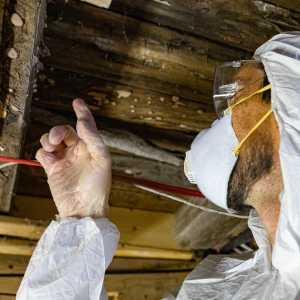 Older homes may have materials and insulation located in the attic. In most cases, the attic is inaccessible and not frequently maintained. Components such as roof vents and intakes may become clogged, broken, or non-functioning preventing or restricting proper airflow. Other elements such as insulation may break down gradually and infrequent inspections could result in the release of toxic asbestos material into the home’s air. The position of the attic is also problematic as deficiencies in the attic will have a trickle-down effect on the rest of the home. Professional inspection crews will most likely take samples from the attic area to see if there is asbestos in any insulating or framing material. Upon confirmation of the toxic substance, your asbestos professional will create a thorough and detailed solution plan to safely remove the material from the attic of your home. Attic asbestos projects are a more delicate operation because of the potential contamination that could occur during material removal and transport. Licensed and certified professionals have the latest removal tools and processes available ensuring a complete job done safely, within local regulations and bylaws concerning asbestos.
Because of its incredible heat managing properties, asbestos was the go-to material for many components of your home’s basement. Older designs relied heavily on pipe wrapping and many hidden sections of piping may be covered in asbestos-based wraps. Hot water tanks and copper fittings and joints were also wrapped up in blankets made from the toxic material. The main source of asbestos in basements comes from wall insulation made before the 1990s. Asbestos itself does not release harmful particles into the air but when material made with asbestos breaks down, those razor-sharp fibers easily float through the air and can enter through the home’s HVAC system directly in the basement. Components such as insulation and duct tape are only designed to last a few decades and material breakdown is a given. Even older homes that have had new furnaces and hot water tanks put in may still be using the original or older pipe systems that utilize asbestos-based wraps. Inspection crews will focus on your home’s basement when checking for asbestos sites.
Asbestos is a silent and dangerous problem facing homes and commercial properties built before 1990. Breakdown and disintegration of asbestos material can cause severe and lethal health-related issues and must be addressed immediately. Residential and commercial property owners can expect complete, safe, and thorough asbestos removal in Toronto from the professionals at InchByInch. InchByInch delivers consistent and complete execution through its extensive experience in all types and sizes of asbestos removal projects. GTA owners and managers of older properties should consider frequent asbestos testing from InchByInch for complete air quality management.
Got Questions? We’ve Got Answers!